

Who was St David?

A Stained Glass representation of Saint David
St David was a Welsh Bishop, who lived during the 6th century in Mynyw, which has now been renamed to St. Davids, the smallest city in the UK. Although he is more commonly known as St David, his mother Nonita named him Dewidd, he was known as Dewi to the locals. In the traditional story, it is believed that he was born in North Pembrokeshire to a religious woman named Nonita, who gave birth to David on the side of a cliff in the middle of a storm. It is believed that the pain level of this birth was so high that Nonita’s fingers left marks in the rocks and the stone split in sympathy for her. A chapel was built to mark David’s birthplace and was named St. Non’s after Nonita. The ruins of this chapel can still be visited today, south of the city of St. Davids. It is unknown who David’s father was believed, even before his birth, that he would grow up to be a great preacher.
What did St. David do?
He grew up in Mynyw and became well known for his teachings, it is also believed that he performed miracles, such as; Restoring his blind tutor’s sight, raising a hill from the ground while preaching, so that people at the back could see him better and ressurecting a child grom the dead with tears. Throughout his life, he founded many monastic settlements and churches. Including a church and monastery on the banks of the Ruver Alun. This became known as Tyddewi, or ‘David’s house’. Unfortunately, the original church was burned down during a Viking raid. The current Cathedral in St Davids was built by the Normans on the same site some time in the 12th Century. It is also believed that he founded Glastonbury Cathedral.
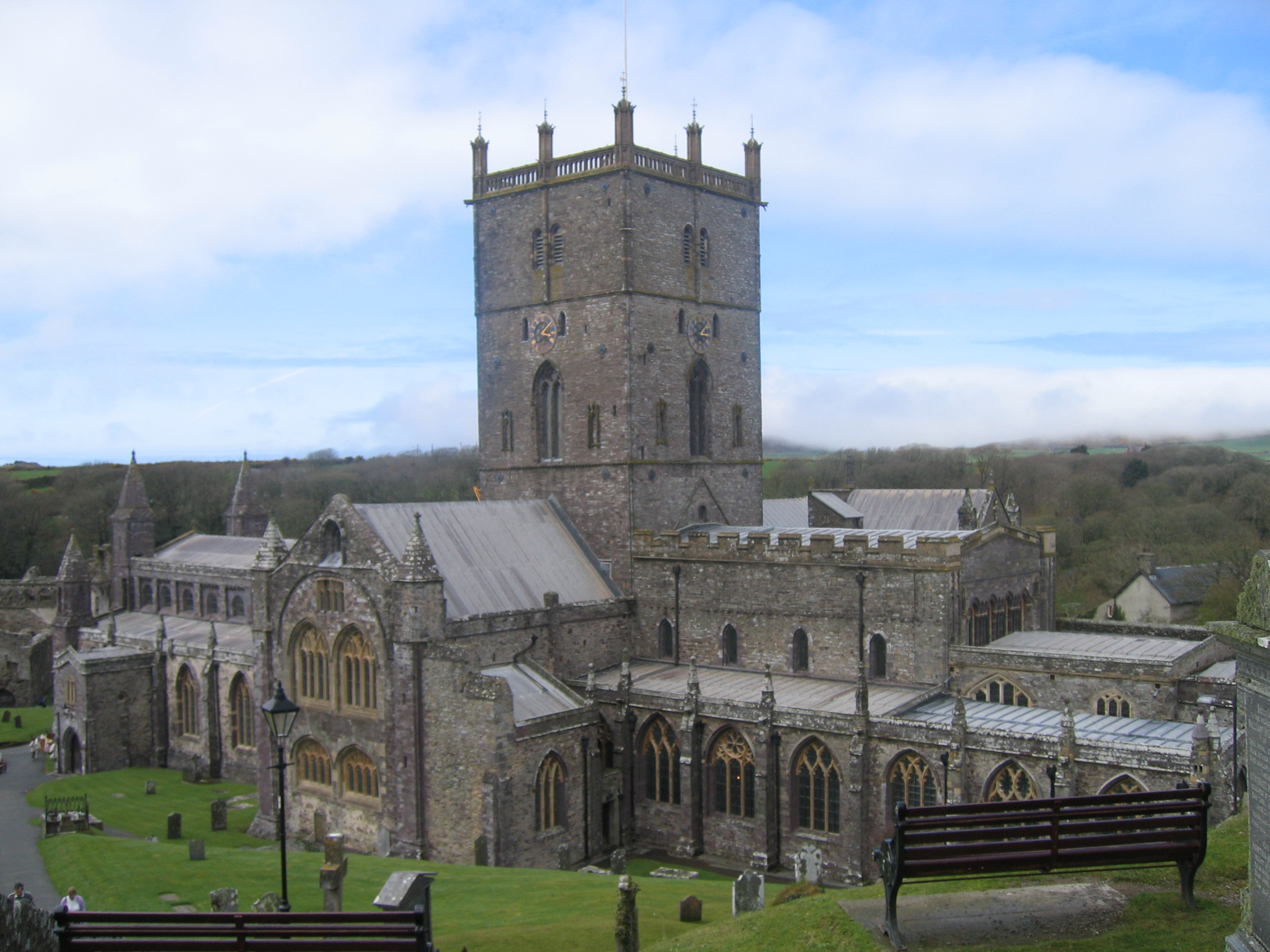
Saint David’s Cathedral
Death
St. David died of natural causes on the 1st March, around 600AD. His remains are kept at St David’s Cathedral, in the city of St Davids. Many people have made the pilgrimage to this cathedral, including William the Conqueror. It was not until 1120 that St David was officially canonised by Pope Callactus II, where afterwards he was declared the patron saint of Wales.
How do you celebrate Saint David’s Day?
St. David’s day is also known as ‘The Feast Day of Saint David’, which has been celebrated on the 1st of March in Wales since the 12th Century. Saint David’s Day is celebrated with singing and traditional dancing. Children are encouraged to wear traditional Welsh costume. Traditionally, girls wear a plaid skirt with a red shawl and a black tall hat or bonnet. Boys traditionally wear flat caps and shorts. In recent years, people have begun to dress as rugby players, miners and medieval Welsh Princes.
Daffodils and Leaks are both national symbols of Wales. The leak is the national emblem of Wales due to a Legend created by Saint David. Saint David told Welsh soldiers to pull up Welsh leeks from the ground and wear them on their helmets so that they could be more easily be distinguished from their enemies, the Saxons.
Daffodils are the national flower of Wales. In Welsh, daffodils are called Cenhinen Bedr, meaning ‘Peter’s leek’. Daffodils are likely associated with Wales and Saint David’s Day because they bloom between late February and early March, when Saint David’s day happens.
Traditionally, Cawl is eaten, which is a Lamb and Vegetable broth. It is typically served alongside bread and cheese. Welsh cakes, a flat scone with raisins, are also eaten a lot around Saint David’s day, however, it is also one of the most popular puddings in Wales all year round.

Daffodils in the sunshine
How do you say ‘Happy Saint David’s Day’ in Welsh
In Welsh, ‘Happy Saint David’s Day’ is spelled ‘Dydd Gŵyl Dewi Hapus’. Attached below is a video showing you how to pronounce it!
